
– Project Overview
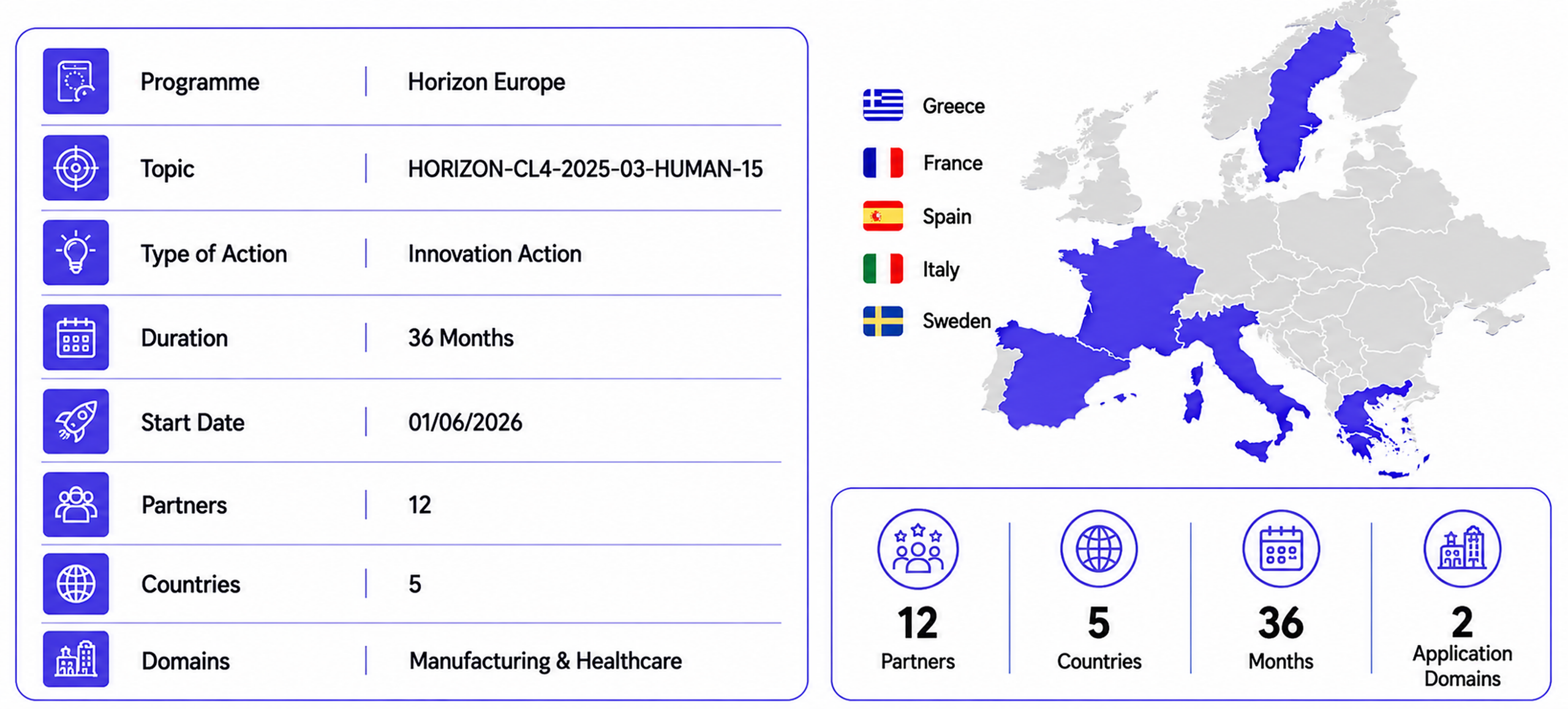
SYNERGIA is a 36-month Horizon Europe project under the HORIZON-CL4-2025-03-HUMAN-15 call, aiming to redefine Extended Reality (XR) experiences through Generative AI, multimodal sensing and human-centric design.
By combining real-time emotion and cognitive sensing, adaptive 3D assistants and dynamic immersive worlds, SYNERGIA enables personalized, inclusive and trustworthy XR environments for training, rehabilitation and collaboration.
– Ambitions
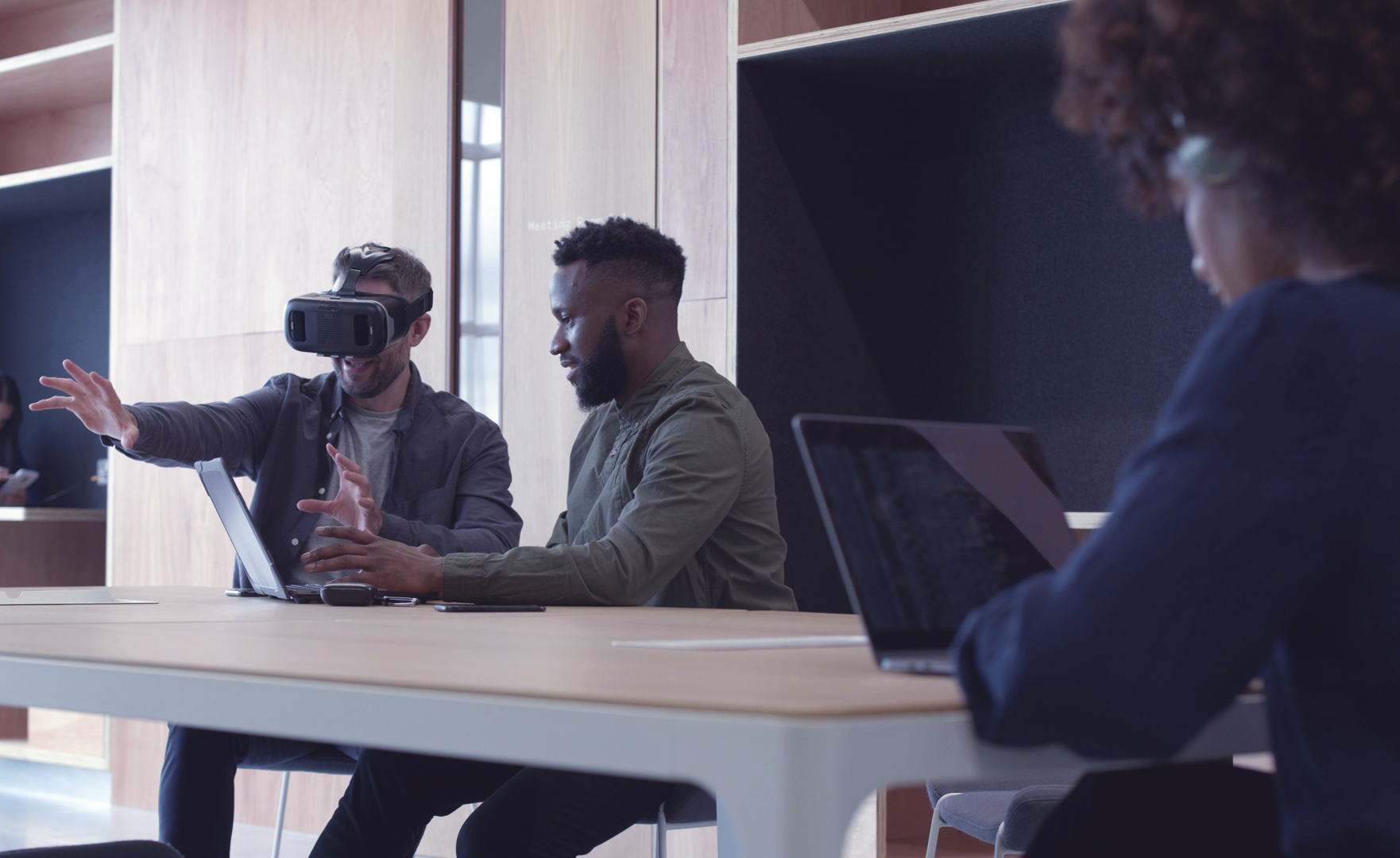
A next-generation platform for adaptive, inclusive, and trustworthy virtual environments
Our way to human-centric and adaptive virtual experiences
SYNERGIA is pioneering the next generation of human-centric virtual environments by combining Extended Reality (XR), Generative Artificial Intelligence (GenAI), Human Digital Twins and intelligent AI agents. The project enables immersive digital experiences that understand, adapt and respond to each user’s needs in real time.
Through emotionally aware virtual assistants, adaptive immersive worlds, and privacy-preserving AI technologies, SYNERGIA supports personalized training, rehabilitation and skills development across healthcare and industrial environments. By placing people at the center of digital innovation, SYNERGIA aims to create more inclusive, accessible and effective experiences that improve learning, wellbeing and productivity for all.
SYNERGIA aims to bridge the gap between rigid XR systems and human needs by delivering

Adaptive XR environments
Virtual worlds that dynamically adjust to users’ emotions, skills and contexts.

Human-centric AI
3D assistants that understand, reason and act like empathic partners.

Inclusive design
Solutions accessible to all, regardless of language, ability, or background.

Edge-first architecture
Privacy-preserving, low-latency and GDPR-compliant by design.

Cross-sector impact
Validated in manufacturing, aerospace, healthcare, robotics and inclusion.
– Building the future of immersive XR
A human-centric, agentic, generative and trustworthy XR ecosystem
To realize its vision, SYNERGIA introduces four interconnected technological pillars that redefine immersive, adaptive and ethical XR experiences.
4 technological pillars
Lightweight, edge-deployable AI models for real-time, privacy-preserving detection of emotion, fatigue and cognitive states, enabling Human Digital Twins (HDTs).
Multilingual, emotionally aware avatars for real-time translation, sentiment analysis and proactive, inclusive guidance.
Text-to-3D and diffusion pipelines for dynamic, realistic and adaptive virtual environments.
GDPR-compliant, explainable, and interoperable framework via multi-agent platforms, federated learning and open standards (AAS, FIPA).
Our mission
To make XR smarter, safer, and more human, empowering users across industries and abilities.
– Partners
Meet the Consortium
SYNERGIA brings together 12 leading European organizations, combining research excellence, industrial expertise and end-user insights to deliver a groundbreaking XR solution.
Project Coordinator, WP3 & WP7 Leader
Laboratory for Manufacturing Systems & Automation (LMS) is oriented on research and development in cutting edge scientific and technological fields. LMS is involved in a number of research projects funded by the European Commission and European industrial partners. Particular emphasis is given to the co-operation with the European industry as well as with a number of “hi-tech” firms.
LMS is under the direction and technical coordination of Professor George Chryssolouris. It currently employs approximately 120 researchers organized in three different groups: a) Manufacturing Processes Modelling and Energy Efficiency, b) Robots, Automation and Virtual Reality in Manufacturing and c) Manufacturing Systems.
lms.mech.upatras.gr
WP2 Leader, Ethics & AI Governance
CEA is a leading French research organization specializing in AI, multimodal sensing and ethical technology. Within SYNERGIA, CEA leads the development of emotion and cognitive sensing frameworks, ensuring real-time, privacy-preserving human state detection. Their Sensory and Ambient Interfaces Laboratory brings cutting-edge expertise in affective computing and XAI.
cea.fr
WP1 Leader, Human-Centric Strategy
The University of Skövde (HIS) is a key player in human-machine interaction, ergonomics and inclusive design. As WP1 leader, HIS drives SYNERGIA’s requirements collection, system architecture and ethical framework, ensuring the solution is user-centered, accessible and socially responsible. Their ASSAR Innovation Arena provides a real-world testbed for human-robot collaboration.
his.se
WP4 Leader, Generative AI for Immersive Worlds
Vicomtech is a Basque research center specializing in computer graphics, AI and immersive technologies. As WP4 leader, they develop SYNERGIA’s Generative AI models for dynamic 3D world creation, enabling real-time adaptation of virtual environments from text, images, or 3D data. Their expertise in 3D generation and XR ensures highly realistic and interactive immersive experiences. Besides, as leaders of the LLM adaptation task, Vicomtech will also develop innovative methods to adapt the Generative AI Assistant to diverse audiences, including persons with intellectual disabilities.
vicomtech.org
WP5 Leader, Integration & Dataspace
We Plus is an Italian SME specializing in digital transformation, cloud platforms and multi-agent systems. As WP5 leader, they deploy SYNERGIA’s MAS (Multi-Agent System) and dataspace infrastructure, ensuring seamless integration, interoperability and secure data exchange across pilots. Their expertise in AAS (Asset Administration Shell) and federated learning guarantees a scalable and GDPR-compliant solution.
we-plus.eu

Exploitation & Training
TFCC is a Greek center of excellence in manufacturing training and upskilling. Within SYNERGIA, TFCC leads dissemination, exploitation and training activities, ensuring the project’s results are adopted by SMEs and industrial partners. Their hands-on expertise in teaching factories helps bridge the gap between research and real-world application.
teachingfactory-cc.eu

WP3 Task Leader (Avatar Design & Camera Logic), WP6 leader, Technical Contributor
Immersion is a French SME specializing in XR technologies, 3D visualization and human-machine interfaces. In SYNERGIA, Immersion leads the design of adaptive 3D avatars and camera logic (WP3), ensuring realistic, inclusive and culturally adaptive virtual assistants. Their expertise in Unity/Unreal, edge computing and accessibility guarantees high-quality, user-friendly XR experiences.
immersion.fr

Technical Contributor, Inclusive XR Training
Ludus is a Spanish SME developing VR-based safety training solutions. In SYNERGIA, they contribute to inclusive XR interfaces and scenarios, ensuring accessibility for users with cognitive disabilities. Their Ludus platform provides a base for adaptive, gamified training in safety-critical contexts.
ludusglobal.com
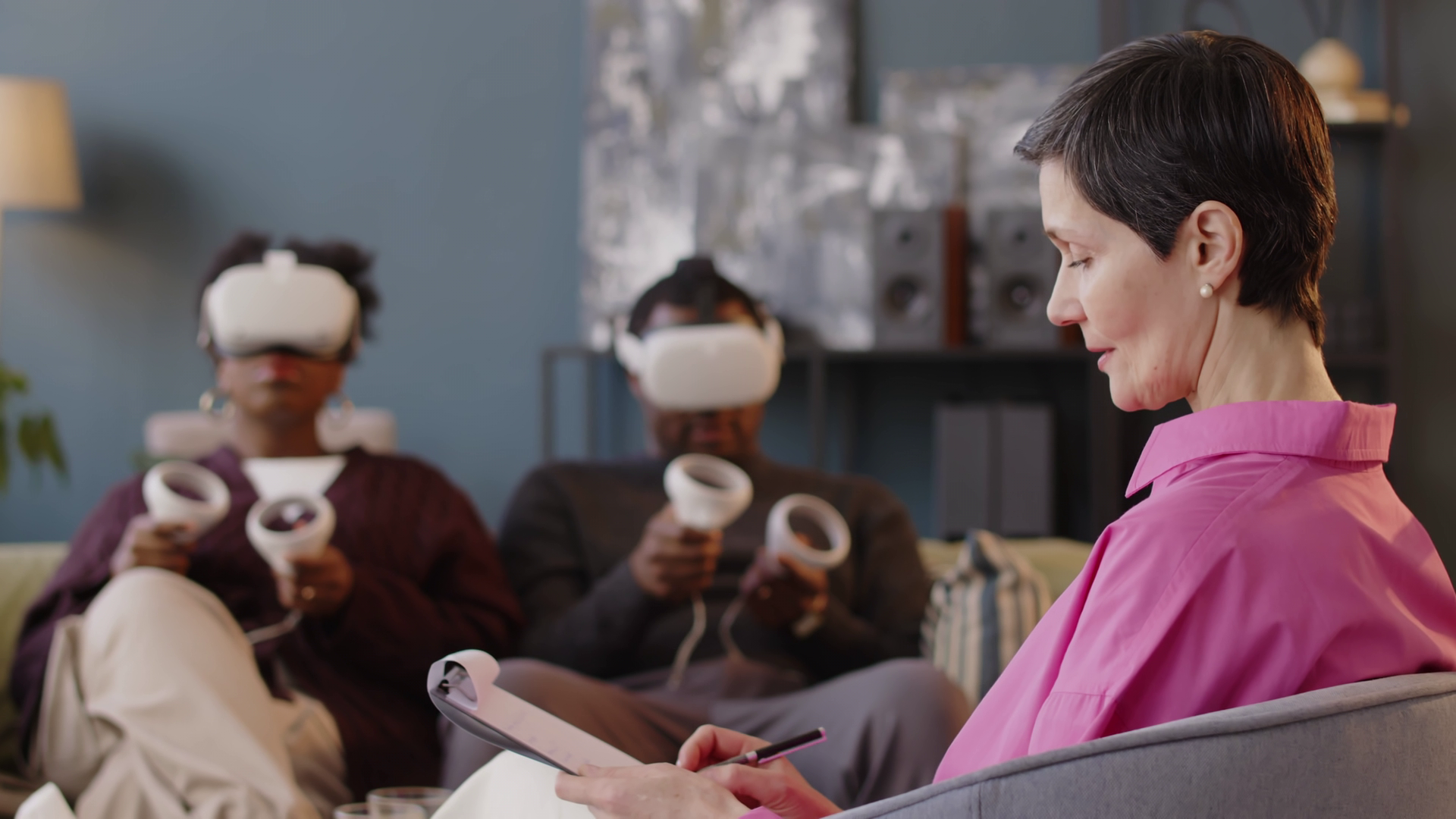
End-User, Healthcare Pilot (Parkinson’s Speech Therapy)
Fondation HOPale is a French healthcare network specializing in neurological rehabilitation, including Parkinson’s disease. As an end-user partner, they validate SYNERGIA’s adaptive XR solution for speech therapy, ensuring it improves patient adherence and clinical outcomes. Their expertise in patient-centered care guides the project’s healthcare applications.
hopale.fr

End-User, Manufacturing Pilot (Machine Assembly & Maintenance)
PRIMA Industrie is a global leader in sheet metal working technologies, with a strong focus on industrial automation. As an end-user partner, they test SYNERGIA’s XR training solution for machine assembly and maintenance, aiming to reduce training time by 30% and improve operational efficiency.
prima-industrie.com

End-User, Aerospace Pilot (Drilling Training)
Airbus Atlantic is a global leader in aerostructures, pilot seats and premium passenger seats. As an end-user partner, they validate SYNERGIA’s adaptive XR solution for drilling training, ensuring it reduces errors by 10% and improves trainee well-being.
airbus.com
End-User, Inclusion Pilot (VR Safety Training)
GUREAK is a Basque organization specializing in professional inclusion for people with disabilities. As an end-user partner, they test SYNERGIA’s XR safety training for workers with cognitive disabilities, aiming to reduce training costs by 25% and improve autonomy.