Meet The Laboratory for Manufacturing Systems and Automation (LMS): coordinating SYNERGIA and connecting AI, XR and Human Digital Twins
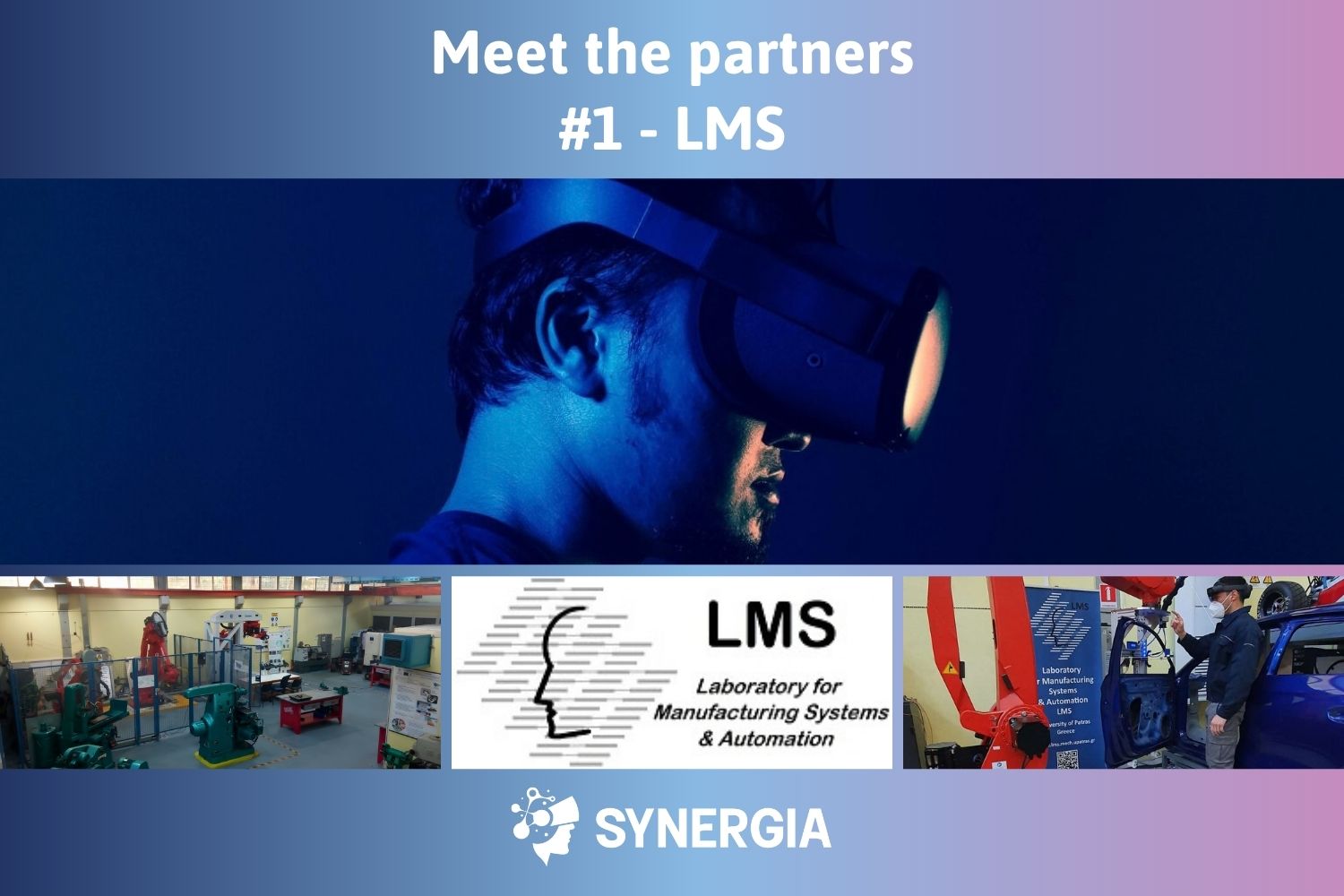
The SYNERGIA project is based on an ambitious collaboration between 12 European partners. So, we have decided to introduce them to you one by one. Today, in this first article in the series, we are spotlighting the Laboratory for Manufacturing Systems and Automation (LMS), based at the University of Patras in Greece, which is coordinating the project. Specialising in advanced manufacturing technologies, artificial intelligence, digital twins, extended reality (XR) and robotics, the LMS is actively helping to shape the factories of the future and train the next generation of workers.
Let’s find out more about the LMS and its role within the project, in particular its work on leading the development of the 3D assistant based on generative AI and is contributing to the architecture and integration of the project’s various technologies.
Could you introduce LMS and its role in SYNERGIA?
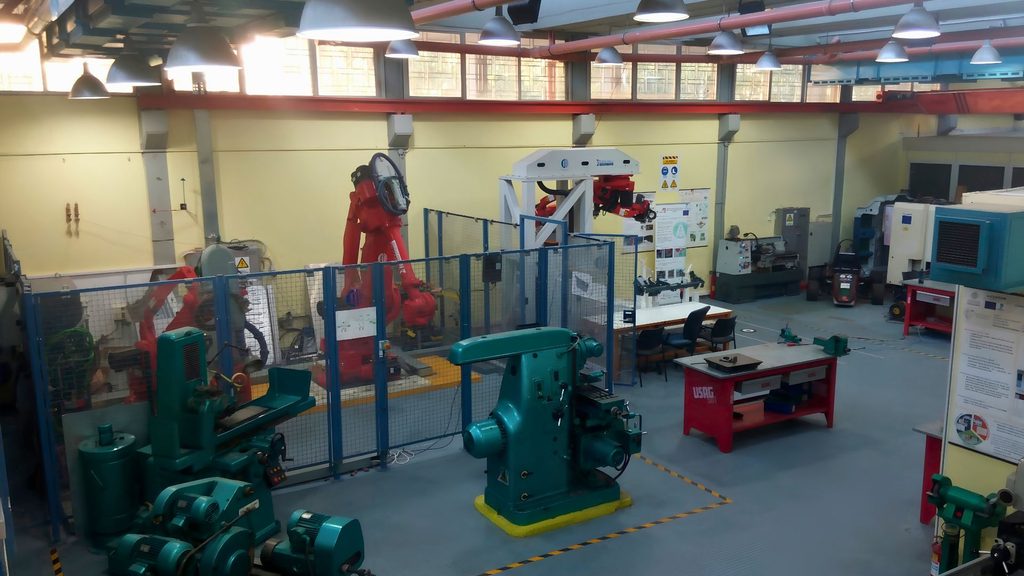
The Laboratory for Manufacturing Systems and Automation (LMS) is part of the Department of Mechanical Engineering and Aeronautics at the University of Patras in Greece. We conduct research at the intersection of advanced manufacturing, digital technologies and human-centred production, with expertise spanning Artificial Intelligence, Digital Twins, eXtended Reality, Robotics and Industry 4.0/5.0. LMS works closely with European research organisations and industrial partners to turn emerging technologies into practical solutions for factories of the future and the next generation of workforce.
LMS coordinates SYNERGIA and is responsible for keeping its scientific, technical and administrative work aligned across the consortium. We lead the work on the GenAI-based 3D assistant and the project’s management and data-management activities, while contributing to the overall architecture and integration. Our technical role includes on-device orchestration, context-aware interaction components, immersive world co-authoring tools, and support for language-model development and infrastructure deployment. We also help ensure that the project’s technologies come together as a coherent solution which can be validated in real use cases.
What are you bringing to SYNERGIA, and what makes your contribution unique?
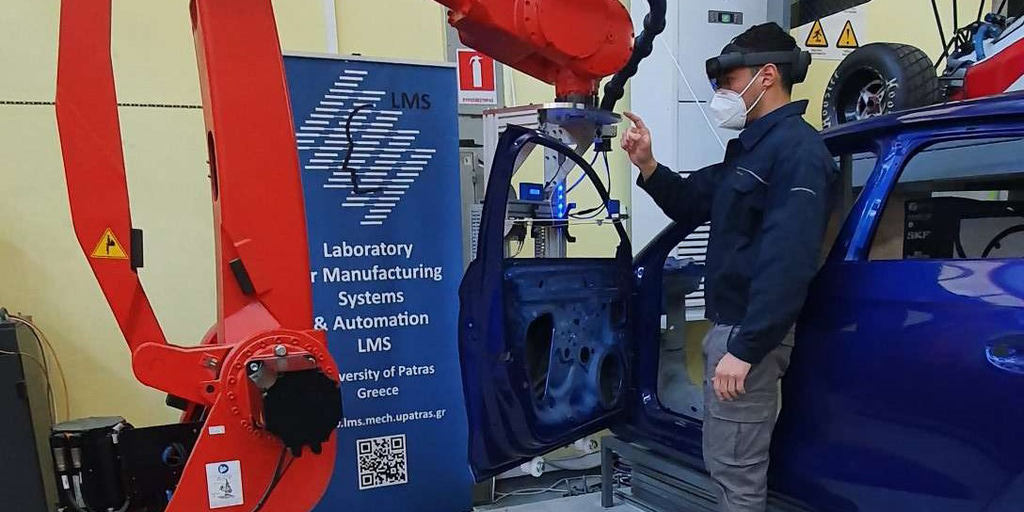
LMS brings expertise in Human Digital Twins, multimodal artificial intelligence, agentic systems and immersive XR environments. Our work combines transformer and time-series models for understanding human state, multimodal language models for natural interaction, real-time analysis, and on-device orchestration for responsive 3D assistants. We also contribute web- and Unity-based tools for creating and adapting immersive worlds, together with explainable-AI methods that help users understand why the system responds in a certain way.
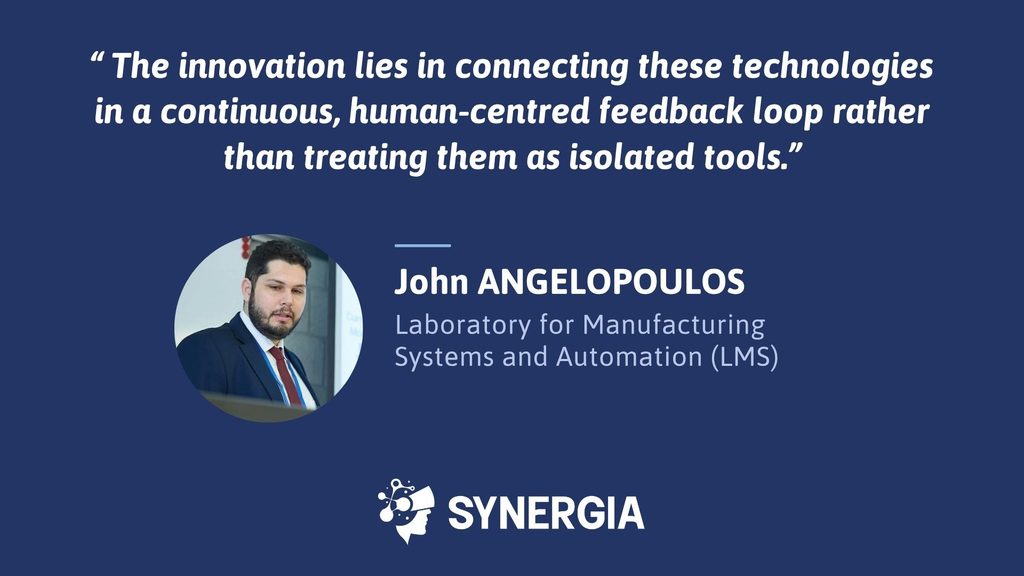
The innovation lies in connecting these technologies in a continuous, human-centred feedback loop rather than treating them as isolated tools. Signals such as gaze, voice, motion and task context inform a Human Digital Twin, which can then guide an AI assistant and adapt an immersive environment to the user’s needs in real time. Edge processing, federated learning and explainable AI are incorporated to protect sensitive information and make adaptations transparent. Standards-based interfaces and multi-agent orchestration will also make the approach portable across manufacturing, training and healthcare settings.
What challenges do you anticipate in SYNERGIA, and how will the project benefit LMS?
One major challenge is integrating sensing, AI agents, immersive environments and secure data services while maintaining the low latency required for natural interaction. We will address these issues through a modular architecture with clearly defined interfaces, edge processing, federated learning, explainable AI and ethics-by-design safeguards. Co-design and iterative testing with the project’s pilot organisations will help us identify practical risks early and refine the solution around real users and working conditions.
Through the development of the SYNERGIA project, LMS will be capable of advancing its research in agentic AI, Human Digital Twins and adaptive XR through demanding real-world applications. Working with industrial and healthcare partners will give us valuable evidence about what makes these technologies useful, trustworthy and transferable beyond the laboratory. The project will also strengthen our European collaboration network, including links with sister projects, and create opportunities to contribute to standards and reusable research assets. These results can feed into future research, education and technology transfer for the manufacturing sector and other human-centred domains.
Why is SYNERGIA an important project for the future of your field ?
The next generation of AI and XR systems should adapt to people, rather than requiring people to adapt to technology. SYNERGIA addresses this need by combining immersive training and support with real-time awareness of user context, accessible interaction and transparent decision-making. This is especially important as European industry and healthcare face skills shortages, ageing workforces and a growing need for safe, continuous reskilling. By validating a reusable and privacy-conscious architecture across sectors, the project can help move human-centred virtual environments from promising demonstrations to dependable everyday tools.
If SYNERGIA could achieve one breakthrough in your domain, what would it be?
Our ideal breakthrough would be a trusted closed-loop learning environment capable of recognizing changing user needs and safely adapting its guidance, content and virtual world in real time providing a realistic and highly immersive experience. The system would explain the reason for each meaningful adaptation and remain accessible to people with different abilities and backgrounds. Achieving this would demonstrate that powerful AI personalization can also be transparent, inclusive and ready for deployment in safety-critical settings.
This is just the beginning of our partner series. Stay tuned as we introduce the other organizations contributing their expertise to SYNERGIA and working together to shape the future of XR.